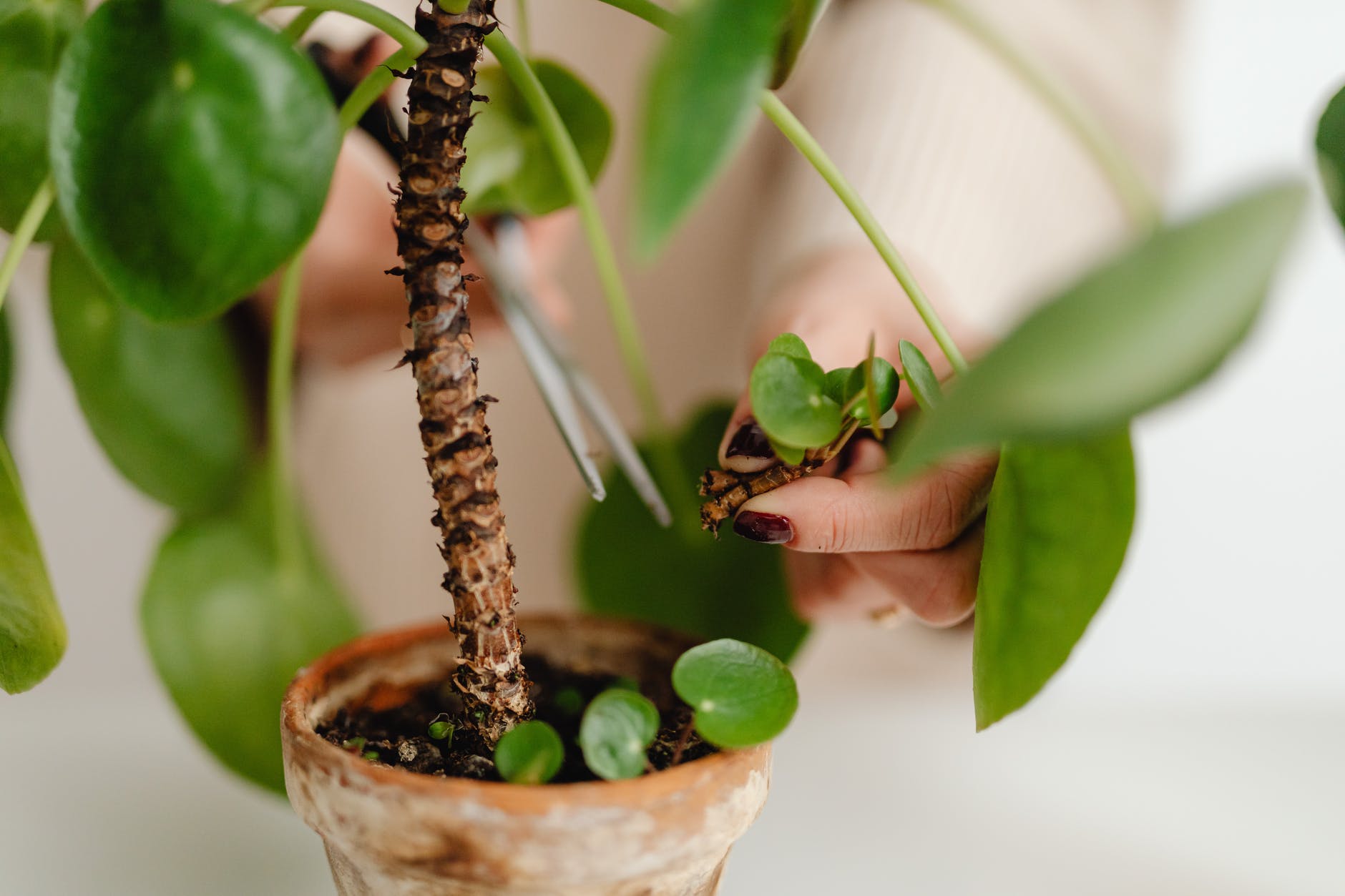
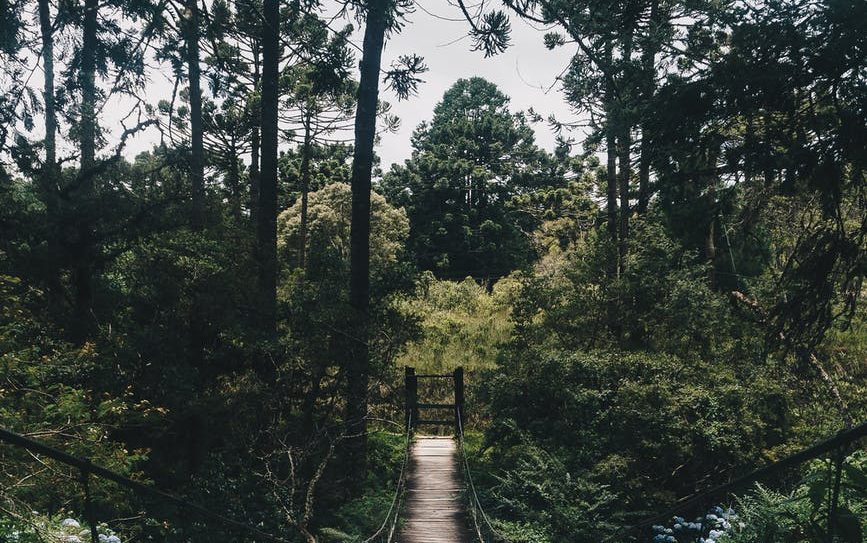
Whether it’s some plants in your house or a garden or farmland, the principle of under-planting (planting species under or over others), which is central to a forest garden, is the same. By opening up the tallest vegetation layers, we let in more light, so that we can add some more different species below them. This provides greater diversity of habitats for plants, insects, animals, birds and fungi.
Some tips for underplanting:
- Cut out lower branches or foliage layers away. You can do this to halfway up the main stem without damaging the plant/tree. This lets the light in.
- Identify the light/heat/soil conditions of the location and find species that will thrive there. Use shade loving species where the canopy is still dense.
- Biodiversity doesn’t ‘like’ tidy. Re-think your idea of beauty and let the soil layer be wild. Leave the lower branches (you just trimmed) on the ground to provide shelter for insects, mammals, fungi and bacteria. Let the leaves lie on the soil and protect these critters (some hibernating). All the nutrients flow back into the soil as natural fertiliser.
- Avoid using pesticides and herbicides.
 Forest garden in the wilds